
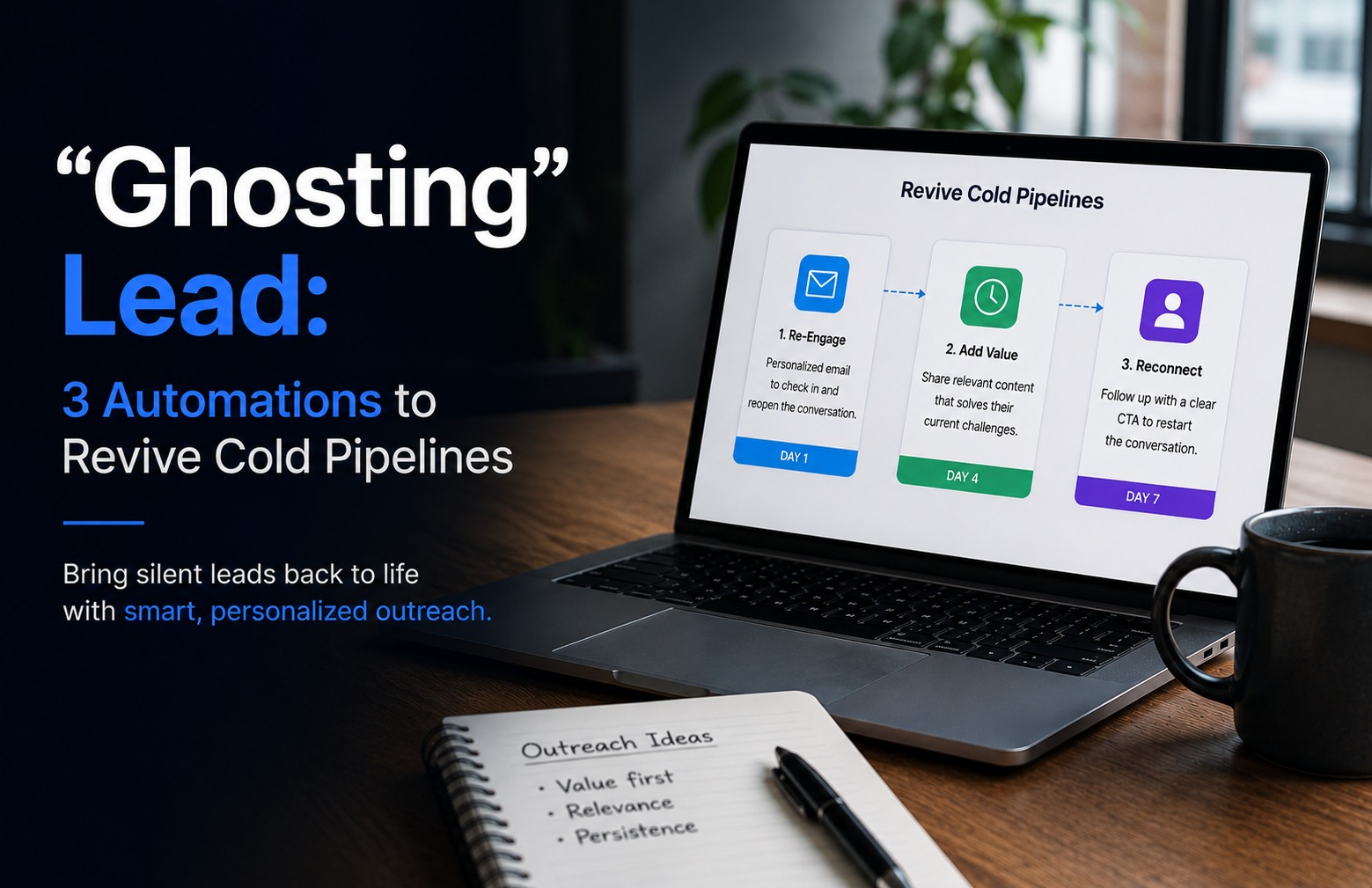
You had a solid conversation with a prospect. They seemed interested. Then — nothing. No reply, no callback, no sign of life. Sound familiar?
Cold pipelines are one of the biggest silent revenue killers for sales and marketing teams. This guide is for B2B sales reps, revenue ops managers, and marketing teams who are tired of watching warm leads go cold and don't know how to bring them back without sounding desperate.
Studies show up to 79% of leads never convert due to lack of follow-up — not because they lost interest, but because nobody reached out at the right time. Manual follow-ups fail because they rely on memory. Automation fixes this.
Understanding the Cold Pipeline Problem
What It Means When Leads Go Silent
A lead going quiet doesn't always mean they've lost interest. Life, competing priorities, budget freezes, and organizational changes all get in the way. Silence is a signal worth reading carefully, not a dead end.
The hidden revenue cost of ignoring ghosted leads is staggering:
- Ghosted leads already know your brand — making them 40-50% cheaper to re-engage than cold prospects
- Studies show up to 79% of leads never convert due to lack of follow-up
- Every silent lead sitting untouched represents real revenue bleeding out of your pipeline quietly
- Most leads need 5-7 touchpoints before they respond — if anyone follows up at all
Why Traditional Follow-Up Tactics Stop Working
The Manual Follow-Up Trap
Manual follow-ups rely on a rep remembering to reach out at the right moment — which rarely happens consistently. Reps get busy, priorities shift, and leads fall through the cracks. A generic "just checking in" email after weeks of silence feels tone-deaf and kills any remaining interest.
| Traditional Follow-Up | Automated Re-Engagement |
|---|---|
| Relies on memory and manual effort | Triggers automatically based on time or behavior |
| Generic, one-size-fits-all messaging | Personalized to where the lead left off |
| Inconsistent timing | Perfectly timed every time |
| Limited scalability | Runs across hundreds of leads simultaneously |
| High unsubscribe rates | Lower churn when done right |
Automation removes the human error factor and keeps leads warm without your team lifting a finger.
How Automation Changes the Re-Engagement Game
The Three Automations That Work
The best B2B sales teams aren't running manual follow-ups anymore. They're running three types of automations in parallel, each designed to catch leads at different points in their silence cycle.
Automation 1: Timed Re-Engagement Email Sequences
A. Setting the Right Trigger Points for Cold Leads
Timing is everything when a lead goes quiet. Set triggers based on inactivity windows — typically 14, 30, and 60 days of silence — so your automation fires at the right moment rather than too early or embarrassingly late.
- 14-day trigger: Lead opened emails but stopped clicking
- 30-day trigger: Lead visited your site but never booked a call
- 60-day trigger: Lead was in active conversation, then disappeared completely
B. Crafting Messages That Reignite Interest Without Pressure
Nobody wants to feel chased. Your re-engagement emails should feel like a helpful nudge from someone who genuinely remembers them — not a desperate sales pitch. Lead with value: share a relevant case study, a quick tip, or a resource tied to the problem they originally came to you with. Keep the tone warm and the ask small.
"The best re-engagement email isn't about your product. It's about reminding them why they were interested in the first place."
The Email Sequence Framework
Optimizing Send Frequency to Avoid Unsubscribes
Spacing matters more than frequency. Here's the framework that prevents unsubscribes while pulling leads back:
| Sequence Stage | Send Timing | Goal | Tone |
|---|---|---|---|
| Email 1 | Day 1 of trigger | Soft re-introduction | Friendly, memory jogger |
| Email 2 | Day 5 | Value drop (resource/tip) | Educational, helpful |
| Email 3 | Day 12 | Direct but gentle check-in | Personalized, warm |
| Email 4 | Day 21 | Final breakup email | Respectful, door-opening |
Spacing emails this way keeps you visible without feeling pushy. The "breakup email" — done right — actually pulls cold leads back more often than you'd expect.
Measuring the Success of Your Revival Automations
Key Metrics to Track Pipeline Reactivation
Tracking the right numbers tells you whether your revival automations are actually pulling leads back or just burning budget:
| Metric | What It Tells You | Target |
|---|---|---|
| Reactivation Rate | % of cold leads who re-engage after automation | 15-35% |
| Reply-to-Send Ratio | How many respond vs. receive the sequence | 5-12% |
| Time-to-Reactivation | Days until a ghosted lead re-enters active pipeline | 3-14 days |
| Revenue from Revived Leads | Closed deals sourced from cold pipeline recovery | Track separately |
| Cost Per Reactivated Lead | Automation tool spend ÷ leads successfully revived | Under $5 |
Using A/B Testing to Continuously Improve Sequences
The Right Way to Optimize
- Test one variable at a time: subject lines, send timing, message tone, or CTA phrasing
- Minimum sample size: 100 leads per variation to get statistically meaningful data
- Track separately: open rates, click rates, and reply rates — high opens with zero replies means your hook works but body copy doesn't
- Rotation schedule: Rotate winning variants into your main sequences every 30–60 days
- Never lose winners: Archive all test data to identify long-term patterns
Knowing When to Permanently Remove a Dead Lead
The Cleanup Rule
Not every cold lead deserves infinite follow-up. A lead is genuinely dead when:
- They've gone through your full re-engagement sequence
- Shown zero engagement across email and retargeting channels
- Their contact data is bouncing or outdated
Archive them cleanly rather than deleting — you may want that data later for trend analysis. Keeping dead leads pollutes your deliverability scores and skews your pipeline metrics.
Scaling What Works to Maximize Long-Term Pipeline Value
From One Automation to Evergreen Systems
Once you've identified which sequences and channels produce the strongest reactivation rates, replicate that structure across other cold segments. Document the exact timing, messaging framework, and triggers that drove results, then build them into your CRM as evergreen workflows.
Cold pipeline isn't a one-time cleanup project — it's an ongoing revenue recovery system that compounds in value the longer you run and refine it.
Revive Your Ghosted Leads
Get the exact 3-automation framework, email sequences, and measurement templates used by top sales teams to recover 30-40% of their cold pipeline.
3 Ready-to-Run Sequences
14, 30, and 60-day automation triggers with proven messaging
Trigger Framework
Exact CRM setup guide and automation rules
Metrics Dashboard Template
Track reactivation, reply rates, and ROI automatically
A/B Test Roadmap
12-month optimization schedule that compounds results
The Implementation Timeline
Start With One Automation, Scale From There
- Week 1: Define your 14, 30, and 60-day trigger groups in your CRM
- Week 2: Write and customize your 4-email sequences for each trigger
- Week 3: Set up automation rules and test with 50-100 leads
- Week 4: Launch full automation and establish daily monitoring dashboard
- Week 5+: Monitor reactivation metrics and begin A/B testing
Conclusion: Your Cold Pipeline is Money Waiting to Be Revived
Cold leads don't always mean dead leads — sometimes they just need the right nudge at the right time. Timed re-engagement email sequences keep your brand on their radar without feeling pushy.
The best part? Once these automations are set up, they do the heavy lifting for you. Keep an eye on your revival metrics so you know what's working and what needs tweaking. Start with one automation, see the results, and build from there.
Your pipeline isn't as cold as you think — it just needs a little warmth. Download the free Cold Pipeline Automation Kit above and start reviving leads today.