
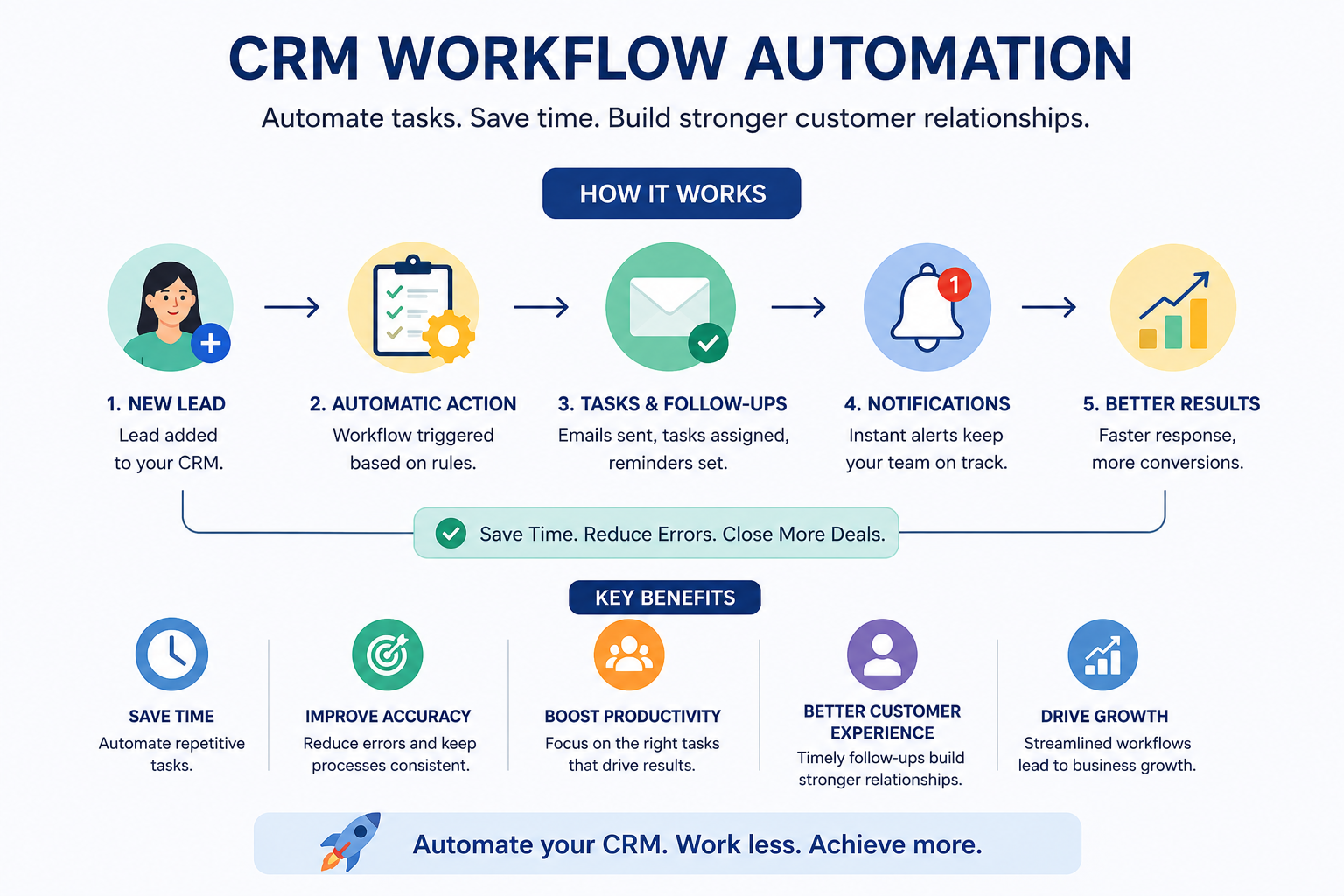
Workflow Automation Benefits: How Businesses Save Time, Reduce Costs, and Boost Productivity
In today's fast-paced business environment, companies are under constant pressure to do more with fewer resources. Managing repetitive tasks manually can slow down operations, increase costs, waste valuable time, and lead to human errors that impact profitability.
This is where workflow automation becomes a game-changer for modern businesses. By using technology and intelligent automation to eliminate repetitive processes, organizations can streamline operations, improve efficiency, and enable teams to focus on strategic work that drives growth.
In this comprehensive guide, we'll explore the key workflow automation benefits, real-world applications, and why businesses of all sizes are embracing automation to stay competitive.
What Is Workflow Automation?
Workflow automation is the process of using software, AI, and predefined rules to automatically perform repetitive business tasks without manual intervention. Instead of employees handling every step manually, automated workflows complete tasks faster, more accurately, and consistently.
- Automatically assigning new leads to the sales team
- Sending welcome emails and onboarding messages to new customers
- Generating invoices after order confirmation
- Approving leave and expense requests through predefined workflows
- Sending payment reminders before due dates
- Data entry and form processing from multiple sources
- Document routing and approval chains
- Report generation and scheduled distribution
By automating these tasks, businesses can reduce delays, improve accuracy, eliminate human error, and significantly enhance overall productivity across all departments.
Why Workflow Automation Matters
Every business has routine processes that consume valuable employee time. Teams often spend hours on repetitive tasks such as data entry, report generation, approvals, and follow-ups. These manual activities reduce productivity, increase operational costs, and leave less time for innovation.
- Manual data entry consumes hours daily
- Approval delays interrupt workflows
- Frequent human errors and mistakes
- High operational costs
- Limited scalability
- Employee burnout and frustration
- Tasks complete in seconds
- Instant approvals and routing
- Consistent accuracy and quality
- Reduced operational expenses
- Scales effortlessly with growth
- Happy, engaged teams
Top 10 Benefits of Workflow Automation
One of the biggest advantages of workflow automation is dramatic time savings. Tasks that once required hours of manual effort can now be completed in minutes or even seconds:
- Automatic report generation instead of hours of compilation
- Invoice processing completed instantly
- Email notifications sent automatically
- Customer onboarding completed in minutes
- Task assignments distributed instantly
This allows employees to dedicate more time to high-value work that requires critical thinking and decision-making.
When repetitive work is automated, teams can focus on projects that require creativity, strategy, and problem-solving:
- Faster project completion and delivery
- Better employee performance and engagement
- Improved customer service quality
- Increased business output and revenue
- More innovation and strategic thinking
Automation helps organizations accomplish significantly more without increasing their workforce or budget.
Manual processes are prone to costly mistakes that impact business operations and customer relationships:
- Incorrect data entry creating duplicate records
- Missed approvals causing workflow delays
- Duplicate records confusing customer information
- Forgotten follow-ups missing business opportunities
- Calculation errors in financial reports
Workflow automation ensures every process follows predefined rules, significantly reducing costly errors and improving data accuracy.
Automation reduces the need for repetitive manual work, helping businesses save significantly on operational expenses:
- Reduced labor hours spent on routine tasks
- Less paperwork and physical storage needs
- Fewer manual processing steps and exceptions
- Elimination of costly mistakes and rework
- Better resource utilization and efficiency
- Reduced need for overtime and temporary staff
Over time, these cumulative savings contribute directly to improved profitability and competitive pricing.
Automated workflows make it easier for teams to work together across departments by providing visibility and coordination:
- Clear task ownership and assignments
- Faster approvals and routing between departments
- Improved communication and notifications
- Better project visibility across teams
- Reduced delays from manual handoffs
Everyone knows what needs to be done, who is responsible, and when deadlines must be met.
Workflow automation provides managers with real-time dashboards, reports, and actionable insights for informed decisions:
- Instant access to key performance metrics
- Real-time workflow status and bottleneck identification
- Automated alerts for critical exceptions
- Data-driven insights for strategic planning
- Faster response to business opportunities
Instead of waiting for manual reports, business leaders can instantly access the information they need to make smart decisions.
Customers expect quick responses and seamless service. Workflow automation helps businesses meet and exceed these expectations:
- Instant responses to customer inquiries
- Automated status updates and notifications
- Faster order processing and fulfillment
- Reduced waiting times for responses
- Consistent and professional communication
Satisfied customers are more likely to return and recommend your business to others.
Every task follows the same predefined workflow, ensuring consistent results regardless of who handles the work:
- Standardized process execution every time
- Consistent quality and output across teams
- Reduced confusion from different approaches
- Support for business compliance requirements
- Audit trails for accountability
This standardization helps maintain quality, supports compliance, and builds customer confidence.
As businesses grow, manual processes become increasingly difficult and expensive to manage. Workflow automation scales effortlessly:
- Handles increased transaction volumes automatically
- No significant additional resources required
- Consistent performance regardless of scale
- Rapid expansion into new markets or regions
- Maintains efficiency while growing operations
Whether you're processing 100 or 100,000 transactions, automated systems can manage growth efficiently without proportional cost increases.
Modern workflow automation platforms include robust security features to protect sensitive business information:
- Role-based access controls limiting data exposure
- Complete audit trails tracking all actions
- Secure data storage with encryption
- Reduced risk of unauthorized access
- Prevention of accidental data exposure
- Compliance with data protection regulations
Automation helps protect critical business information while maintaining compliance with industry regulations.
Real-World Workflow Automation Examples
Lead Management Transformation
Automatic lead capture, scoring, assignment, and follow-up reminders increase conversion rates and sales velocity significantly.
Employee Onboarding
Automated employee onboarding, leave approvals, and attendance tracking reduce HR administrative workload dramatically.
Invoice Processing
Automatic invoice generation, expense approvals, and payment reminders improve financial accuracy and cash flow management.
Campaign Management
Automated email campaigns, social scheduling, and lead nurturing sequences improve engagement and ROI significantly.
Retail Operations
Order processing, inventory updates, and customer notifications automated for seamless retail operations.
Customer Support
AI chatbots answer routine questions while complex issues are escalated to experienced agents for efficiency.
Manufacturing
Production scheduling, quality checks, and supply chain coordination automated for operational excellence.
Industries Benefiting from Workflow Automation
Workflow automation delivers value across diverse industries by automating repetitive processes and improving efficiency:
- 1Manufacturing — Production planning, quality control, predictive maintenance, and supply chain optimization
- 2Retail — Order processing, inventory management, customer service, and point-of-sale operations
- 3Healthcare — Patient scheduling, medical documentation, billing, and appointment reminders
- 4Finance — Invoice processing, expense approvals, reconciliation, and financial reporting
- 5Education — Student enrollment, course registration, grade reporting, and communication automation
- 6Real Estate — Lead management, property listings, appointment scheduling, and contract processing
- 7Logistics — Order fulfillment, shipment tracking, delivery coordination, and inventory updates
- 8Professional Services — Time tracking, invoicing, project management, and client communication
Quantifying Cost Savings from Automation
The financial impact of workflow automation is significant and measurable. Businesses typically see cost reductions in multiple areas:
| Cost Area | Without Automation | With Automation | Savings |
|---|---|---|---|
| Invoice Processing | $3-5 per invoice | $0.50-1 per invoice | 80% reduction |
| Customer Onboarding | 2-4 hours manual work | 10 minutes automated | 90% time savings |
| Report Generation | 8-16 hours per week | Automated daily | 95% reduction |
| Approval Workflows | 2-3 days average | Minutes to hours | 70% faster |
| Error Correction | 5-10% error rate | 0.1% error rate | 99% reduction |
| Staff Requirements | Full-time roles | Reduced headcount | 30-50% savings |
Productivity Improvements
Beyond cost savings, workflow automation drives measurable productivity improvements across organizations:
- 35-50% increase in employee productivity after automation implementation
- 70% reduction in time spent on administrative tasks
- 3-5x faster task completion compared to manual processes
- 40% decrease in approval cycle times
- 60% fewer errors due to consistent automation rules
- 25-30% improvement in employee satisfaction and engagement
- 20% faster time-to-market for new products and services
Implementation Strategy & Best Practices
Identify processes that consume significant time or cause frequent delays:
- Invoice and expense processing
- Customer onboarding workflows
- Approval and authorization chains
- Report generation and distribution
- Lead assignment and follow-up
Map out existing workflows to understand current state:
- Identify all process steps and decision points
- Document approval requirements and exceptions
- Note system dependencies and integrations
- List stakeholders and their responsibilities
- Measure current processing times and costs
Select automation software that fits your specific needs:
- Compatibility with existing systems and applications
- Ease of integration and minimal disruption
- Scalability as your business grows
- Strong vendor support and implementation guidance
- Affordable pricing aligned with business value
Proper training ensures successful adoption and maximum benefits:
- Hands-on training sessions with automation tools
- Clear documentation and user guides
- Best practices for using automation efficiently
- Ongoing support and troubleshooting assistance
- Change management communication
Track metrics to ensure automation delivers expected benefits:
- Time saved on automated tasks
- Error reduction and quality improvements
- Cost savings and financial impact
- Employee productivity gains
- Customer satisfaction improvements
Common Implementation Challenges
While automation offers tremendous benefits, organizations should proactively address potential challenges:
- ⚠Change Resistance — Address employee concerns about automation and job security through clear communication
- ⚠Integration Complexity — Ensure seamless connectivity with existing legacy systems and applications
- ⚠Data Quality Issues — Clean data is essential for automation success; address data quality first
- ⚠Process Design — Poorly designed processes lead to poor automation results; optimize before automating
- ⚠Maintenance Needs — Automated systems require ongoing monitoring and updates
The Future of Workflow Automation
Workflow automation continues to evolve with emerging technologies such as artificial intelligence, intelligent document processing, robotic process automation, and predictive analytics. Future automation will be smarter, more adaptive, and increasingly autonomous.
Conclusion
Workflow automation is no longer a luxury—it's a strategic necessity for businesses that want to remain competitive in today's digital economy. By automating repetitive tasks, organizations can save significant time, reduce operational costs, improve accuracy, and free employees to focus on high-value work that drives real business results.
The benefits are measurable and substantial: faster processing, fewer errors, lower costs, happier employees, and better customer experiences. Whether you're a startup, SME, or large enterprise, investing in workflow automation positions your organization for long-term success and sustainable growth in an increasingly competitive marketplace.
Why Choose iSaral for Workflow Automation?
At iSaral, we help businesses transform operations with intelligent workflow automation solutions tailored to your specific needs and business challenges:
Custom Workflow Automation
Tailored automation solutions designed to streamline your specific business processes and eliminate manual work.
End-to-End Support
Expert guidance from process analysis through implementation, training, and ongoing optimization.
Automate Your Business Today
Get expert analysis of your workflows and discover how automation can save time, reduce costs, and boost productivity.
Process Assessment
Comprehensive analysis of your current workflows and automation opportunities
Custom Roadmap
Tailored automation implementation plan aligned with your business goals
Expert Guidance
Dedicated support throughout your automation journey and beyond
Measurable ROI
Cost savings and productivity gains within weeks of implementation
Frequently Asked Questions
What is workflow automation?
Workflow automation uses software and AI to automatically perform repetitive business processes without manual intervention, reducing time, errors, and operational costs.
What are the biggest benefits of workflow automation?
The main benefits include significant time savings, increased productivity, reduced errors, lower operational costs, faster decision-making, improved collaboration, better customer experiences, and support for business growth.
Which businesses can benefit from workflow automation?
Businesses of all sizes across industries such as retail, healthcare, finance, manufacturing, education, logistics, real estate, and professional services can benefit from workflow automation.
How much does workflow automation cost?
Costs vary depending on complexity, but most businesses see ROI within 3-6 months through cost savings and productivity improvements. Many solutions offer flexible, affordable pricing options.
How long does it take to implement workflow automation?
Simple workflows can be automated in weeks, while complex multi-department processes may take 2-3 months. Most businesses see measurable benefits within the first month of implementation.
Will automation eliminate jobs?
No. Automation eliminates repetitive tasks, allowing employees to focus on higher-value work. Organizations typically redeploy employees to strategic initiatives rather than reducing headcount.