
 🤖
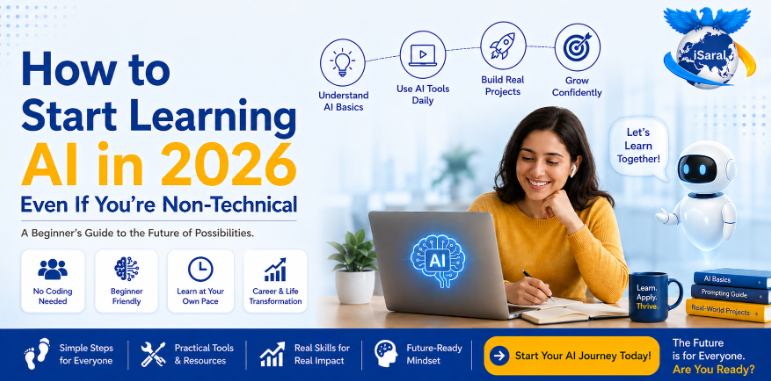
🤖Artificial Intelligence is no longer a futuristic concept reserved for programmers and tech companies. In 2026, AI has become part of daily business operations, content creation, customer support, education, healthcare, and even small local businesses. The good news is that you don't need a computer science degree to get started; anyone can learn AI without coding to stay ahead in their career.
If you've been searching for ways to leverage these tools, this guide is designed specifically for you. Whether you're a student, entrepreneur, freelancer, teacher, or working professional, you can begin learning AI step by step — even if you have zero technical background.
1. Why AI Matters in 2026
AI is changing the way people work. Businesses use AI tools to automate repetitive tasks, improve customer service, create content faster, analyze data, and save time.
Today, people who understand how AI works hold a major advantage in their careers and businesses. The best part is that modern AI tools offer user-friendly interfaces. You can now use AI platforms through simple dashboards without writing complex code. That's why more people actively try to learn AI without coding and build practical AI skills.
2. Can You Really Learn AI Without Coding?
The Old Belief: AI Is Only for Programmers
Many beginners assume AI requires advanced math, programming languages, and years of computer science training. This belief stops thousands of capable people from even starting — they think the door is locked unless they can write code, when in reality most modern AI tools were built specifically so non-coders never need to.
The Reality: Absolutely, You Can
You do not need to become a software engineer to understand AI or use AI tools effectively. Many successful business owners, marketers, designers, and freelancers already use AI daily without writing a single line of code. What you truly need is:
- Curiosity — a willingness to explore new tools
- Consistency — showing up to practice regularly
- Basic digital skills — comfort using apps and dashboards
- Willingness to experiment — trying things without fear of getting it wrong
Coding can help later if you want to build advanced AI applications, but beginners do not need it.
Understanding AI in Simple Words
Artificial Intelligence represents technology that allows machines to perform tasks that usually require human intelligence. These tasks include writing content, answering questions, creating images, translating languages, predicting trends, automating customer support, and organizing data. When you use chatbots, voice assistants, or AI image generators, you already interact with AI.
3. Step-by-Step Guide to Learn AI Without Coding
Step 1: Start With AI Basics
Before using advanced tools, spend time understanding the fundamentals. As you begin your journey to learn AI without coding, make sure you grasp these key concepts practically:
- What is AI? Machines that simulate human thinking and decision-making.
- What is Machine Learning? A branch of AI where systems learn patterns from data.
- What is Generative AI? AI that creates content like text, images, videos, and music.
- What are AI Models? Systems trained on huge amounts of data so they can perform tasks.
You don't need technical depth initially. Focus on understanding the concepts practically.
Step 2: Use AI Tools Daily
The easiest way to learn AI without coding is by using AI tools in real life. Start experimenting with tools for content writing, image generation, presentation creation, video editing, customer support, email drafting, and task automation. The more you use AI tools, the faster you understand how AI works.
Try using AI to:
- Write social media captions
- Summarize articles
- Generate blog ideas
- Create marketing content
- Organize schedules
- Translate languages
- Create business plans
Hands-on practice builds confidence quickly.
Step 3: Learn Prompt Writing in 2026
Prompt writing stands out as one of the most valuable AI skills in 2026. A prompt is simply the instruction you give to an AI tool — for example, "Write a professional email," "Create a blog outline," or "Generate Instagram captions for a clothing brand." The better your prompts, the better the AI responses you receive.
- Be Specific: Instead of "Write content," say "Write a 500-word blog introduction for a bakery business."
- Add Context: Explain your goal clearly.
- Mention Tone: Give the AI a clear style direction (Professional, Friendly, Casual, or Persuasive).
Learning prompt writing is one of the fastest ways to learn AI without coding effectively.
4. Best Non-Technical AI Skills to Learn in 2026
You don't need programming to build valuable AI-related skills. Here are some high-demand AI skills for non-technical people:
✍️ AI Content Creation
- Blogs
- Social media posts
- Emails
- Ads
- Product descriptions
⚙️ AI Automation
- WhatsApp automation
- Email automation
- CRM workflows
📈 AI for Marketing
- Analyze audiences
- Generate campaigns
- Improve SEO
- Create visuals
🎨 AI Design Tools
- Logos
- Presentations
- Images
- Videos
🚀 AI Productivity
- Meeting summaries
- Task management
- Scheduling
- Research
💼 Career Roles
- AI Content Creator
- Prompt Engineer
- AI Automation Consultant
- AI Virtual Assistant
Common Mistakes Beginners Make
AI is a huge field. Focus on one area initially — AI for business, AI for marketing, or AI for content creation.
Many people spend hours watching videos but never use AI tools practically. The fastest learning happens through experimentation.
This mindset stops many beginners from starting. Remember: you can absolutely learn AI without coding.
AI learning is a journey. Consistency matters more than speed.
How Long Does It Take to Learn AI in 2026?
You can understand AI basics within a few weeks if you practice consistently. Here's a realistic timeline:
Understand AI fundamentals and explore tools.
Use AI confidently for daily tasks.
Build workflows and improve productivity.
Develop specialized AI skills for business or career growth.
The key remains regular practice.
Career Opportunities for Non-Technical AI Learners
AI creates opportunities far beyond programming jobs. People who develop these skills can work in highly valued roles like AI Content Creator, AI Marketing Specialist, AI Automation Consultant, Prompt Engineer, AI Virtual Assistant, AI Business Consultant, and AI Workflow Manager. Even small businesses now hire people who understand AI tools and automation.
Best Way to Stay Updated With AI
AI changes rapidly, so continuous learning is important. Follow AI news to stay updated with trends and new tools, join online communities to ask questions and discover new tools, and practice every week — even 20–30 minutes daily improves your AI skills significantly.
Why Choose Us?
Get full access to premium features for 7 days, completely free.
Full Access
Access all premium features without any restrictions
No Credit Card
Start instantly without providing payment details
Expert Support
Our dedicated team is always here to help you succeed
Cancel Anytime
No hidden charges or long-term commitments required
Conclusion: Start Today, Stay Curious
Starting your AI journey in 2026 is easier than ever before. You no longer need advanced programming knowledge or a technical degree to enter the AI world.
The smartest approach is to start small, practice consistently, and focus on practical usage instead of technical complexity. If your goal is to learn AI without coding, remember this: you are not trying to become a machine learning engineer overnight. You are learning how to use AI to improve your work, business, creativity, and productivity.
The future belongs to people who know how to work with AI — not just those who build it. Small steps today can lead to huge opportunities tomorrow.